SAMAYA x GIUSEPPE PAPA
EXTREME CYCLING EXPEDITION IN NEPAL
Giuseppe Papa, a cycling guide, and Davide Ciarletta and Marco Ricci, videographers and photographers, traveled to Nepal to traverse the Himalayas by bike, entirely unsupported. These three individuals went through numerous phases: excitement, exhaustion, and awe. For Samaya, they retrace their adventure, their encounter, and their emotions.
"Have you ever been moved by nature after an immense effort?
Our expedition in Nepal is tinged with a mix of deep emotions, multiple sensations, difficulties, and extreme efforts.
Our journey began on October 24th, after many months of planning and preparing our equipment. 1,200 kilometers and 25,000 meters of elevation gain awaited us to cross Nepal from west to east, from Mahendranagar to Kathmandu.
The first two weeks were filled with long, exhausting days crossing the plains and climbing the initial hills. Along our way, we were lucky enough to meet locals who had never seen a tourist before. We experienced special encounters, marked by great hospitality, wonder, and astonishment.
We pedaled along unpaved roads through the jungle, national parks, and magical, desolate areas. We pressed on, cradled by the exhilarating feeling of knowing this was just the beginning.
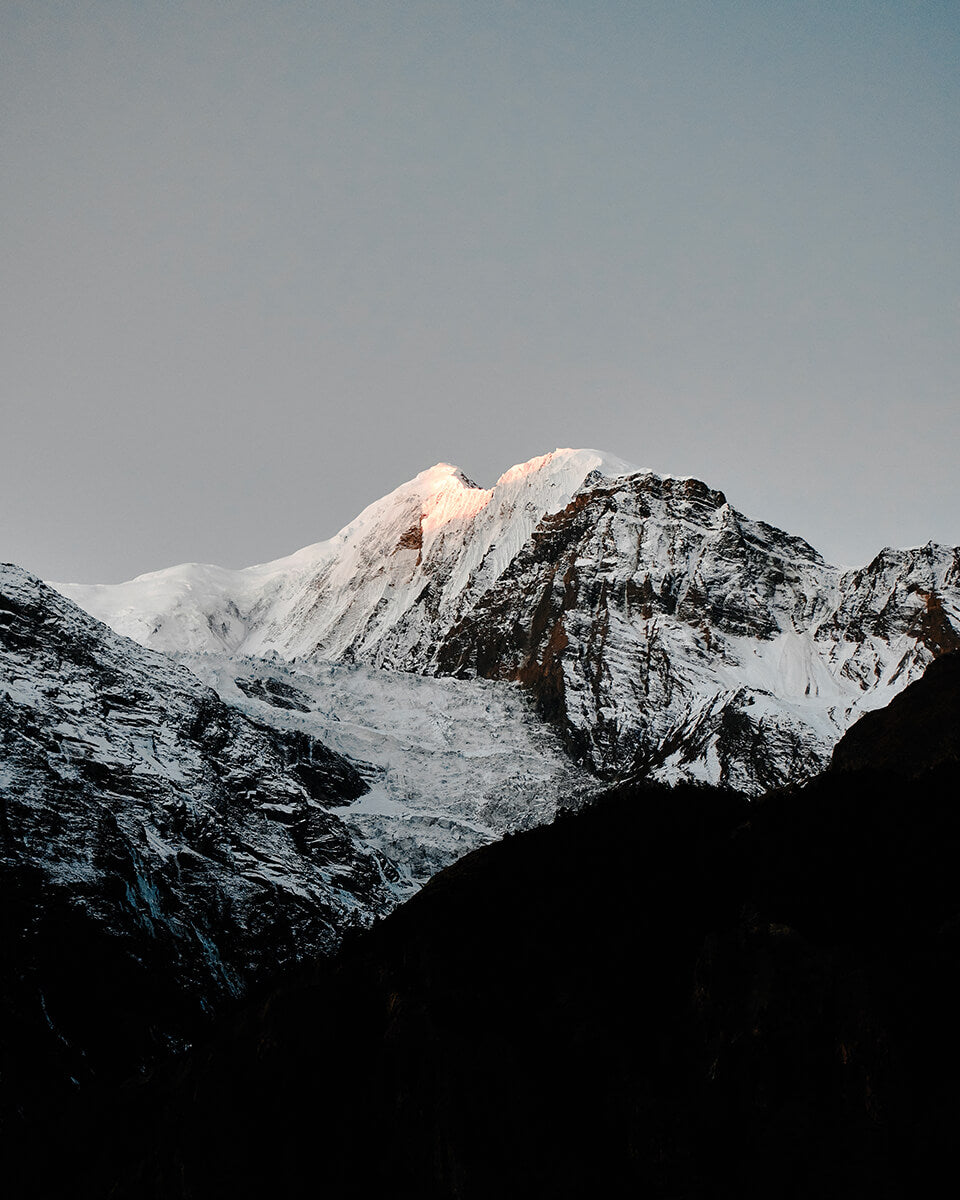
Day after day, we gained altitude. Hill after hill, the great white peaks drew closer. Majestic, the Himalayan mountains rose before us.
Pedaling between Annapurna, Dhaulagiri, and Machhapuchhre was exciting and breathtaking. On November 13th, we reached Pokhara, the true starting point of our Annapurna circuit. The temperature gradually dropped as we passed through Besisahar, Jagat, and Bagarchhap. Bike rides became increasingly difficult as the roads were so rocky.
At that moment, our bikes became our daily companions. We, the bikes, and the region: we had become one. The movement of the wheels was like a parallel to the cyclic nature and spiritual traditions of the region.
Approaching Manang at 3,600 meters, a gigantic chörten greeted us. Passing through these religious temples is an initiation and a blessing: we felt the protection of this welcoming monument, as if we were passing through a portal to another dimension.
The landscape was adorned with Lung-ta, those Tibetan prayer flags fluttering between monasteries perched on steep ridges and imposing rocky peaks. Amidst the silence, sounds emerged—the gongs and drums of the Tibetan monks.
Leaving Manang, the landscape became thinner. As we approached the Thorong La Pass, the difficulty of the climb intensified; the air was thinner. Our bodies needed more time to acclimatize; every effort above 4,000 meters felt ten times more exhausting.
Reaching Khangsar, we decided to leave our bikes for two days and hike to Tilicho Lake at 5,040 meters, to continue our acclimatization quietly. When we passed 5,000 meters for the first time, we felt immense satisfaction, especially after 20 days of intense cycling.
Arriving at Thorong Phedi, we decided to rest, leaving the ascent to High Camp for the next day. We spent the day in this magical valley preparing for the next two days.
The next morning, we covered only 1.3 kilometers, pushing the bike by hand, to reach the Thorong La High Camp at 4,980 meters. Pushing a 35-kilogram bike on this climb was exhausting, but it was only a taste of what awaited us the next morning.
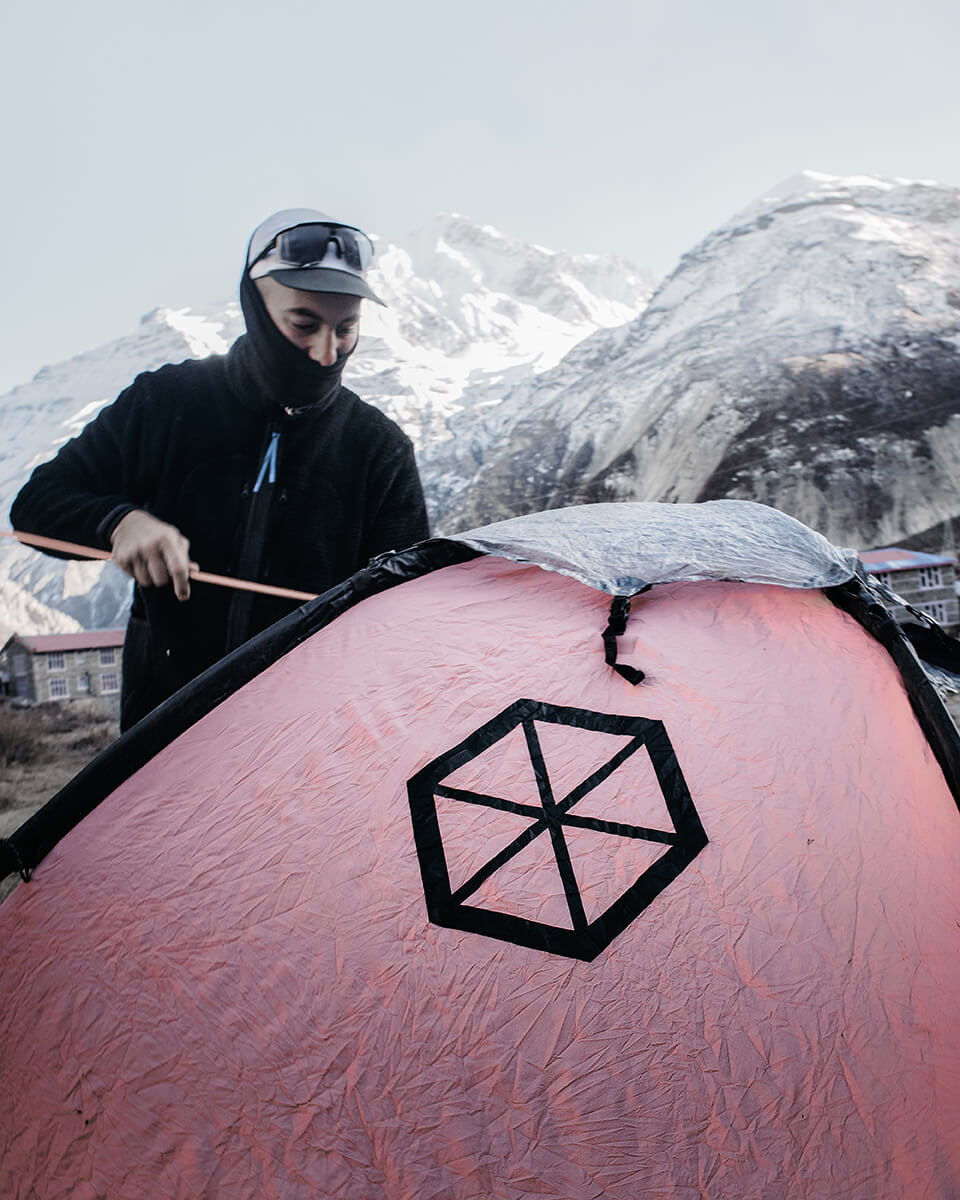
We set up our ultra-light Samaya tents and were ready for the ascent to Muktinath. We planned to depart at 3:30 AM on the morning of November 24th.
Anxious, we couldn't sleep. At -17°C, our tents and bike bags were covered in ice.
A survival mode kicked in, providing us with immense energy and profound happiness for everything we had experienced so far.
After months of preparation, the moment had finally arrived.
We had a quick breakfast and dismantled the tents. After packing everything up, we set off, lit only by our bike lights. We moved forward under one of the most beautiful starry skies of our lives. The cold was biting; we could barely feel our hands and feet.
Halfway through the climb, we met Aide, a sherpa who manages a tea house between High Camp and the pass, who offered us the best hot tea in the world. After this short break, warmed by Aide’s smile and kindness, we continued our ascent.
The first light of day appeared, illuminating the peaks with orange hues. Bathed in this light, we reached the summit of Thorong La Pass, the highest mountain pass in the world. We hugged and thanked our bikes for taking us to the top of these 5,416 meters.
We didn’t stay long at the summit: after a few tears, celebrations, and photographs, we left. The wind was gently picking up, and we needed to descend to warm up. We reached Muktinath before noon.

Our journey turned into an impulse for life, and the difficulties and problems into an adventure. The land of Nepal is not only made of immense landscapes, infinite silences, crystalline air, and unique mountains; it offers something more. You breathe its magic, its sense of the sacred. You meet authentic locals, with an immense humanity that we rarely see. Going to Nepal means returning to Mother Earth; it is about rediscovering one's roots. We will return to the Himalayan peaks because we project onto this distant land a way to be happy, simply and fully.”